
父母爱情
Biden Went to the Middle East to Solve US Economic Problems, Not Bring Peace, Expert Says_我的网站

一 |
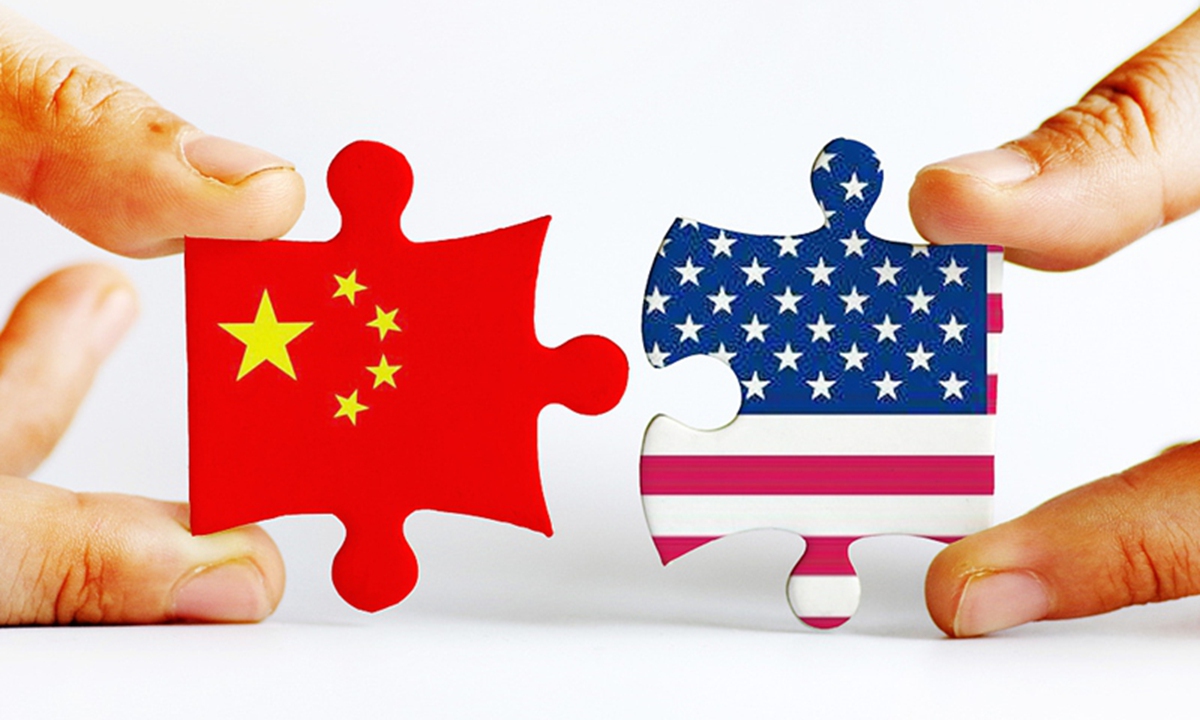
The proposed Office of Management and Budget (OMB) rule, set to take effect in December, would mark one of the biggest overhauls of US science funding in decades, giving political appointees greater authority over grant awards previously guided by scientific peer review and requiring that they "advance the President's policy priorities," according to the Washington Post.
It would also effectively expand the 2011 Wolf Amendment, which bars scientists from using NASA funding for bilateral collaborations with China, to all federal agencies and scientists receiving federal funds, marking the largest break in US-China scientific engagement in decades, the US media outlet reported.
So far, the proposed rule has garnered nearly half a million public comments, many from scientists and leading US science bodies. A Washington Post analysis of 50,000 of those comments found that around 88 percent were negative.
The rule, initially set to take effect in October, was pushed back to December after a bipartisan stopgap funding bill temporarily halted its adoption. Unlike the Wolf Amendment, the rule does not require congressional approval to take effect.
"I do think there are still members of Congress who think we have a monopoly on knowledge. They think we're still in the Cold War Soviet era ... where we were ahead in most areas of science and technology. That is not the case with China. We are no longer the leader in many areas of science," said Tobin Smith, senior vice president for government relations and public policy at the Association for American Universities, which advocates on behalf of leading US research universities, per the Washington Post.
Scientists warn that the rule risks subjecting long-term scientific research to four-year political cycles. "We will not succeed if with every new administration we are ping-ponging back and forth about priorities," the American Association for the Advancement of Science said in a blistering comment, urging the administration to withdraw the rule. "Fast-tracking such profound changes ... hands an easy victory to nations like China," it said, the Washington Post reported.
This reflects a fundamental divide between the US government and the scientific community over how science should develop, Wang Yiwei, a professor at Renmin University of China's School of International Studies, told the Global Times. He noted that politicians tend to believe that suppressing China as a competitor would allow the US to preserve its market dominance and technological edge.
Scientists, however, tend to follow a different logic, as scientific progress depends on openness, exchanges and collaboration. If science and technology are driven solely by competition and private capital, with the ultimate goal of maintaining technological monopolies, this could create greater risks and ultimately undermine US interests as well, Wang said.
The proposed rule change is the latest salvo in a broader battle in Washington over how to respond to China's rise as a scientific superpower. In July, the US National Science Foundation (NSF) also moved to ban collaborations between scientist it funds and many Chinese research institutions and their employees, according to Science magazine.
Liu Shaoshan, director of the Center for Embodied AI at the Shenzhen Institute of Artificial Intelligence and Robotics for Society and a former US-based researcher, told the Global Times in a previous interview that the NSF's new proposed rules created a "talent wall," arguing that restrictions based on nationality, institutional affiliation, and research partnerships could reduce the global talent pool available to the US, weaken its ability to attract leading scientists, and slow scientific innovation.
Liu also said scientific advancement relies not only on discovery but also on the exchange, validation, and dissemination of knowledge.
Wang also said China has built significant strengths through its vast pool of scientists and engineers, complete industrial chains and massive application scenarios, while increasingly moving from application-oriented innovation toward original research. Against this backdrop, US technological blockades and restrictions on cooperation are unlikely to halt China's progress, but could instead isolate American scientists from China's latest research and collaboration opportunities. Such an approach could also prevent the two countries from leveraging their respective strengths and ultimately undermine US competitiveness, Wang said.
。 When describing his Middle East trip goals in a Washington Post op-ed, US President Joe Biden said he was embarking on a journey to conduct diplomacy and work in order to normalize relations between Israel and the Arab world, particularly by making sure that the Israeli-Palestinian peace process continues.,However, many critics begged to differ, mainly because of the background behind his first presidential trip to the Middle East. Biden's trip came amid severe economic hardships at home, which a handful of other Western countries are facing as well. With energy prices soaring, one of the main objectives of the US president was to persuade Saudi Arabia to boost oil production in the hopes of curbing prices.,It brought little results, as Riyadh made it clear it could only boost production from 10 to 13 million barrels per day and no more. On top of that, it created an impression among some observers that Biden, in fact, only came to Middle East because he was compelled to sort out US economic grievances, rather than to promote peace and prosperity.,With respect to the Israeli-Palestinian conflict, Biden and the Saudi Arabian leadership reaffirmed their commitment to a two-state solution "along the 1967 lines". However, the US president asserted that the "ground is not ripe" to restart the talks between the two sides, and neither he demanded a settlement freeze from Israeli PM Yair Lapid when the two met in Jerusalem.,As put by Waleed al-Modallal, professor of political science at Gaza’s Islamic University, it's nothing but "repeated slogans" that are not in fact aimed at resolving the long-standing issue.,"I don't think the American side will practice any sort of pressure on the Israeli side, and everybody knows that," Al-Modallal says. "I think this visit is not to refresh the negotiations between Palestinians and Israelis. [...] It comes to solve the economic problem of Americans. That's all.",The professor pointed out that in reality, there is no political will in Israel to go back to the two-state solution negotiations. Moreover, he continued, there is "no chance" for such a solution, as the majority of the land that the Palestinians consider theirs is occupied by Israeli settlers.,The words of Palestinian President Mahmood Abbas about how this might have been one of "the last chances" for a two-state solution, are essentially a mantra that he has been repeating for a long time, Al-Modallal argues.,"It's repeated words from the American president and from the Palestinian president as well," he says, saying that the so-called "regional solution" is being shifted to the responsibility of Arabs, "and Israel would not pay any price regarding the land, regarding the Palestinians' protection or any other things.",Despite the US' declared position on Palestinians and funds that are coming from Washington to support them, the Biden administration still fails to "touch the core of the issue", which is "political, not economic or humanitarian," Al-Modallal explains.,"It's the easiest solution for Americans to give such gifts," he says.,With little hope for Washington to actually do something meaningful regarding the Israeli-Palestinian peace process, it seems that few Palestinians are taking Biden and his visit, particularly his meeting with Abbas, seriously.,"[This] visit comes to support Israelis and the normalization in the region as well as to solve the problem of power, which touches the American and international economy. That's it. It's not to renew or re-enhance Palestinian-Israeli negotiations. We all know that," the professor concludes.。

二 |
Current article:http://g6jga.nenyaogecebenliexi.shop/l1m/20260826/50659.html
Published on:00:48:40
 【吉田響独占インタビュー2】豪快な激走のち救護室直行も回復で丼飯を豪快に食らう
 手机家电国补申领指南|8月购买空调电脑手机如何参与国补?京东学生认证流程及补贴领取方法
 微光成炬:重庆银行的数字化普惠之路
 '29년 시민의 발' 부산 1호선 전동차, 영광의 고별 운행
 MiniMax上半年收入大涨283% 毛利狂飙464.8%
 中间人:冬窗我骗费内巴切签塔利斯卡,并运作莫拉塔至加拉塔萨雷